
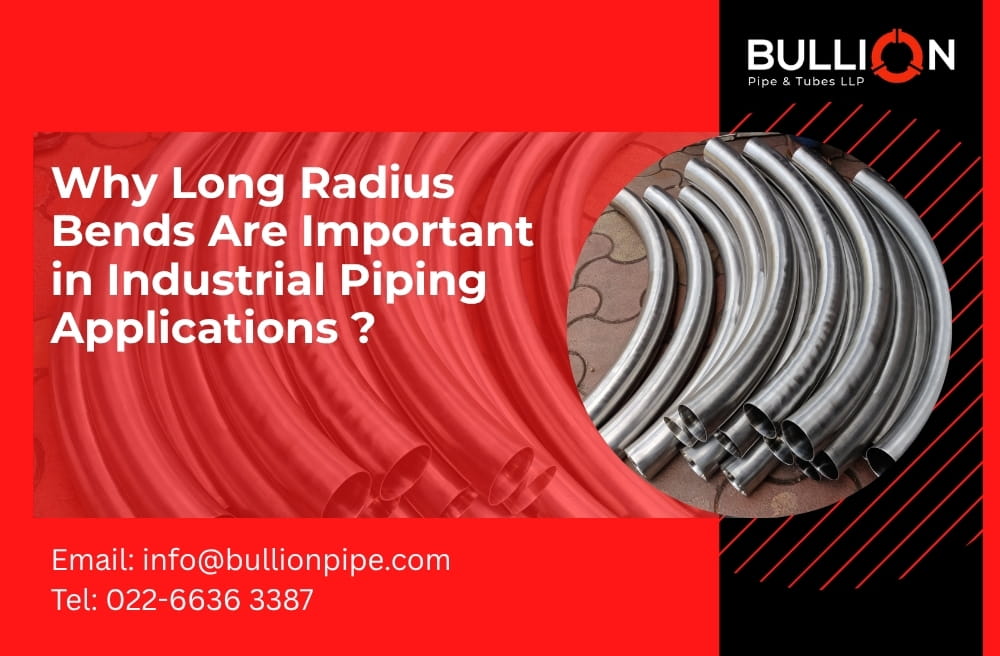
Industrial pipe systems performance in durability, reliability, and safety are the most important factors to consider. One key element that plays a significant part in achieving these objectives can be found in the long radius bends. Used in a variety of industries like oil and gas as well as power generation, chemical processing as well as water treatment, long radius bends provide an even flow of fluid as well as reducing stress on the system.
For companies such as Bullion pipe the provision of quality long radius bends that are of the highest standard is crucial to meet the stringent requirements of the modern industrial infrastructure. This blog will look at the reason why the long radius bends are crucial, what they can do and their contribution to the effectiveness of piping systems.
What Are Long Radius Bends?
The long radius bends can be described as fittings for pipes that are used to alter the flow direction in the pipe system. The most distinctive aspect is that the length of the bent is usually 1.5 times that of the diameter of the pipe (1.5D).
This greater radius allows for an easier change of direction, compared to shorter radius bends, which typically are a radius of the diameter of the pipe (1D).
Key Advantages of Long Radius Bends
1. Improved Flow Efficiency
One of the main reasons that long radius bends are favored is their capacity to ensure the smooth flow of fluid. The curvature is gradual, which reduces turbulent flow and helps to reduce pressure drops within the system.
- Lower energy consumption
- Performance of the system has been improved
- Reduced operating cost
This is why long radius bends are particularly important in industries where fluid dynamics are crucial.
2. Reduced Pressure Loss
The sharp turns of piping systems can cause resistance, resulting in pressure loss. Long radius bends can significantly alleviate the possibility of this.
- Enhanced flow continuity
- Better retention of pressure
- Improved efficiency of the system
For certain applications, such as pipelines for oil or chemical transportation maintaining a consistent pressure is vital.
3. Lower Wear and Tear
Turbulence created by abrupt direction changes can cause erosion, particularly in systems that contain abrasive liquids with high speeds. Long radius bends can reduce this impact.
- Longer life of pipes
- Costs of maintenance reduced
- Increased reliability
Bullionpipe guarantees the long-radius bends of their pipes are made precisely to withstand these difficult conditions.
4. Enhanced Structural Integrity
A long radius bend distributes the stress more evenly throughout the curve, decreasing the risk of cracking and deformation.
- Better distribution of stress
- Improved durability
- Increased safety
This is crucial for high-temperature and high pressure environments.
5. Reduced Noise and Vibration
In the course of turbulent flow, there is often vibration and noise that could affect the whole pipe system. Long radius bends are a great way to reduce the effects of these issues.
- Quieter operations
- Less mechanical stress
- Safety improvements at work
Applications of Long Radius Bends
The long radius bends can be utilized across a broad range of industries because of their durability and efficiency:
1. Oil and Gas Industry
Pipelines used for transportation of natural gas, crude oil and refined products.
2. Chemical Processing Plants
Perfect for handling corrosive and high-temperature fluids.
3. Power Generation
Utilized in water and steam pipelines to guarantee the efficient transfer of energy.
4. Water Treatment Facilities
Make sure that water flows smoothly through distribution and the wastewater system.
5. Food and Beverage Industry
Maintain clean and efficient fluid transport.
Long Radius vs Short Radius Bends
Knowing the differences between short and long radius bends is helpful in choosing the correct part for your project.
| Feature | Long Radius Bends | Short Radius Bends |
| Radius | 1.5D | 1D |
| Flow Efficiency | High | Moderate |
| Pressure Loss | Low | Higher |
| Space Requirement | More | Less |
| Wear and Tear | Minimal | Higher |
Short radius bends are beneficial in restricted spaces, long radius bends are typically more efficient and last longer.
Materials Used in Long Radius Bends
High-end long radius bends made of quality can be found in range of materials to meet various demands of the industry:
- Stainless Steel
- Carbon Steel
- Alloy Steel
- Duplex and Super Duplex Steel
Bullionpipe fabricates long radius bends that are made from top-quality materials that ensure durability, strength and a long service life.
Why Choose Bullionpipe for Long Radius Bends?
When it is about industrial piping, quality and precision is important. Bullionpipe is a reliable provider with long radius bends thanks to the following reasons:
- Strict quality control standards
- A wide selection of materials and sizes
- Custom-designed manufacturing capabilities
- Competitive pricing
- Reliable delivery
Their experience ensures that customers get products that are in line with international standards and function effectively in harsh conditions.
The long radius bend is an important element in industrial piping systems. They provide greater flow efficiency, less pressure loss and increased durability. Their ability to limit the amount of turbulence and evenly distribute stress is what makes them the ideal option across a variety of industries.
If you are a business looking to improve their pipe systems, purchasing high-quality, long radius bends made by a reliable company like Bullion pipe is a wise choice. They not only increase the efficiency of your system but they also help in long-term cost savings as well as operational reliability.
1. What can long radius bends be utilized in pipe systems?
Long radius bends can be used to alter the direction of flow within piping systems, with the goal of minimizing the loss of pressure and turbulence.
2. Why do long radius bends work better in comparison to shorter radius bends?
Long radius bends offer better flow, lower pressure drop and less wear and tear than shorter radius bends.
3. What is the typical length of a bend with a long radius?
The most common radius for the long-radius bends is generally 1.5 times the diameter pipe (1.5D).
4. Which industries employ the most long radius bends?
Industries like oil & gas and power generation, chemical processing as well as water treatment make use of large radius bends.
5. How do long radius bends improve piping system efficiency?
They can reduce turbulence, preserve pressure and guarantee a more fluid flow, which results in an improved system performance overall and less energy use.