
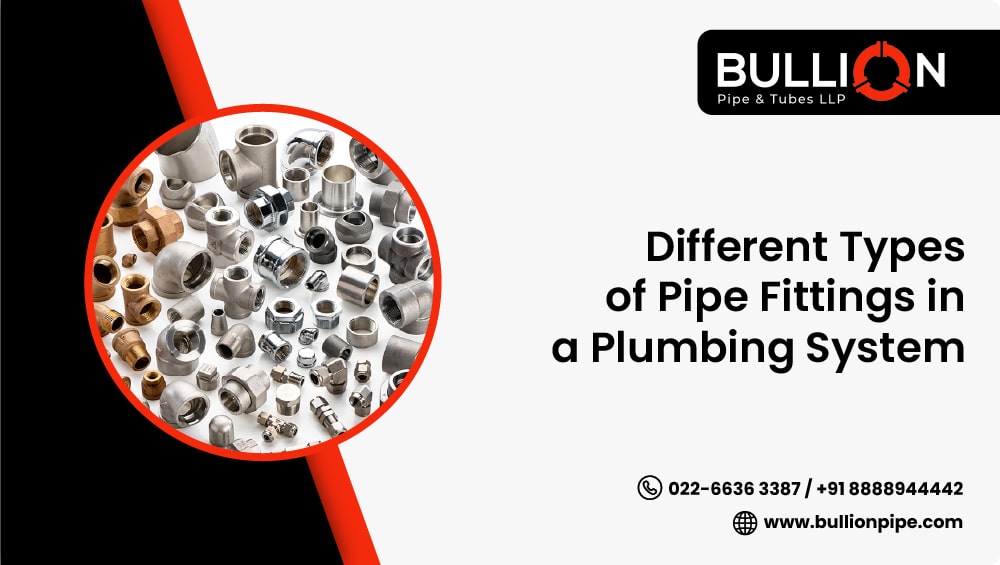
In all plumbing or piping routines, pipe fittings play a required role in connecting pipes, regulating flow, and ensuring the safe transport of fluids and gases. Without them, it would be nearly impossible to design reliable and skilled piping networks used across residential, commercial, and industrial sectors. These fittings come in
- Various tools
- Shapes
- Configurations
all serving a unique desire. Grasping the different types of pipe fittings helps in choosing the true components for any
- Plumbing approach
- Ensuring durability
- Productivity
- Leak-free operation
What Are Pipe Fittings?
Pipe fittings are mechanical components used to connect
- Straight sections of pipes
- Shift to different sizes or shapes
- Control or measure fluid flow
They are usable in several forms—elbows, tees, reducers, unions, couplings, and more—separately crafted to perform a particular observance. Depending on the material and design, they are used in diverse applications, including water supply systems, chemical plants, oil refineries, HVAC systems, and fire protection systems.
Pipe fittings suppliers provide a wide range of fittings that meet national and international standards to confirm truthfulness and consent with various industrial codes.
Key Items Used in Pipe Fittings
Sooner than discovering the types of pipe fittings, it’s essential to understand the assets used in their manufacturing. The choice of material depends on the fluid type, temperature, pressure, and habitat.
1. Stainless Steel:
Really resistant to corrosion and temperature variations, ideal for
- Chemical
- Food processing
- Marine industries
2. Carbon Steel:
Known for their resourcefulness and durability, carbon steel fittings are apt for applications that are
- High-pressure
- High-temperature
3. Copper:
Commonly used in residential water lines and HVAC systems because of its
- Thermal conductivity
- Corrosion resistance.
4. PVC (Polyvinyl Chloride):
Lightweight and cost-effective, ideal for low-pressure and non-corrosive applications like
- Irrigation systems
- Drainage systems.
5. Instrument:
Provides wonderful corrosion resistance and machinability; often used in
- Plumbing
- Hydraulic systems.
6. Cast Iron:
Known for durability and resourcefulness, commonly used in drainage and sewer systems.
Different Types of Pipe Fittings in Plumbing Systems
Now, let’s investigate the most informal types of pipe fittings used in modern plumbing and piping systems.
1. Point Fittings
Elbows are used to change the direction of the flow, typically by 45° or 90°. These fittings are crucial when pipes need to navigate around corners or controls. Long-radius and short-radius elbows are ready depending on the flow controls.
2. Tee Fittings
Tee fittings feature a “T”-shaped design with one inlet and two outlets. They open the door for the flow to be divided or integrated, often used in pipelines that require branch connections. Available in comparable or reducing configurations, tees are essential components in any plumbing network.
3. Reducer Fittings
Reducers connect pipes of different diameters. They come in two vital types—concentric reducers, which have a symmetrical cone shape, and quirky reducers, which have an offset center to prevent air gathering. These fittings are key in systems requiring smooth flow shifts in relation to pipe sizes.
4. Couplings
Couplings bring together two pipes of the same diameter, helping widen or repair pipelines. They can become permanent (welded or soldered) or temporary (threaded or compression type).
5. Unions
Similar to couplings, unions open the door to straightforward disconnection of pipes without disturbing the full line. This makes them worthy for maintenance and inspection points.
6. Cross Fittings
Cross fittings have four openings in four directions. They are commonly used in fire sprinkler systems and industrial setups where multiple flow directions are needed.
7. Nipples
Nipples are short pieces of pipe with male threads on both ends. They connect two fittings or valves, largely in smaller piping systems.
8. Bushings
Bushings are used to connect pipes of different sizes, reducing the size from a more extensive to a smaller bore. Unlike reducers, they fit inside the greater accuracy, offering a quick design.
9. Valves
Yet not timeless fittings, valves are mainly in plumbing systems for controlling the flow of fluids. Natural types combine gate valves, ball valves, test valves, and globe valves.
10. Flanges
Flanges connect pipes, valves, and further equipment in a way that allows simple coupling and disassembly. They are ideal for high-pressure systems where frequent inspection or maintenance is fundamental.
11. Adapters
Adapters connect pipes with different attaching tactics, such as from threaded to welded or from male to female fittings.
12. Olets (Branch Connections)
Olets provide an outlet from a comprehensive pipe to a smaller branch pipe. They come in various types, such as weldolet, sockolet, and threadolet, depending on the system of connection.
Functions of Pipe Fittings in a Plumbing System
The types of pipe fittings serve several necessary functions in a plumbing network:
Connecting: Attaching pipes of the same or different sizes.
Directing Flow: Modifying the direction of flow to meet design controls.
Controlling Flow: Valves and reducers help adjust flow rate and pressure.
Sealing and Termination: Caps and plugs affirm leak-proof sealing.
Factors to Consider When Choosing Pipe Fittings
Selecting the faultless compatible requires consideration of several frameworks:
1. Material Compatibility: Validate that the material is appropriate for the pipe and the fluid being transported.
2. Pressure Rating: The suitable must withstand the operating pressure of the procedure.
3. Temperature Limits: Some tools may deform or fail under extreme temperatures.
4. Maintenance Needs: Consider fittings that grant effortless disassembly and inspection.
Applications of Pipe Fittings
Pipe fittings are used in almost every sector involving fluid or gas transmission, including:
Water supply systems
Oil and gas refineries
HVAC systems
Chemical and petrochemical industries
Food and beverage processing
Fire safety systems
Pipe fittings manufacturers in India cater to these sectors by bringing fittings in various standards, such as
- ANSI
- ASME
- DIN
- JIS
It ensures compatibility with global systems.
Bullion Pipe & Tubes LLP – Fidelity in All Connections
Bullion Pipe & Tubes LLP has institutionalised itself as one of the most reliable pipe fittings suppliers and exporters of high-quality fittings that meet international standards. The company offers a large range of stainless steel, carbon steel, and alloy steel fittings created for strength, correctness, and corrosion resistance.
With an interest in quality pledge and customer satisfaction, Bullion Pipe & Tubes LLP serves a wide range of industries across India and overseas. Their fittings are intended for durability, ensuring smooth flow, leak-proof performance, and long productive life.
Maintenance and Longevity of Pipe Fittings
Endless maintenance is required to ensure the longevity of any plumbing workflow. Key maintenance approaches join:
Appropriate Installation: Use becoming threads and sealants to stop leaks.
Replacement: Replace spoilt or corroded fittings swiftly to prevent wide-ranging system failures.
When sourced from a legendary pipe fittings manufacturer in India, high-quality fittings can last for years, even in difficult environments.
Main point
Understanding the types of pipe fittings is key to designing organised and durable plumbing systems. From elbows and tees to reducers and valves, every one apt serves a precise function that contributes to the whole workflow performance. By choosing the precise matter, design, and supplier, industries can confirm safe and capable fluid transport across various applications.