
In the world of industrial piping systems, fittings play a necessary role in ensuring smooth and productive flow across different sections of pipelines. Among the various types ready to use, buttweld fittings are one of the most commonly used for their
- Property
- Durability
- Leak-proof performance
These fittings provide a permanent, welded connection that ensures a continuous flow of
- Fluids
- Gases
- Steam under high pressure
- High-temperature requirements.
This comprehensive guide by Bullion Pipe aims to help you understand what butt-weld fittings are, their
- Different types
- Advantages
- Applications
- How to select the right butt-weld supplier or manufacturer in India for your industrial needs.
What is a Buttweld Becoming?
A butt-weld-compatible pipe is a suitable pipe that allows the connection of pipes through welding at their ends. The fitting has a curved edge that facilitates a strong, open weld relative to two pipes or in relation to a pipe and a further fitting. This welded joint becomes part of the pipe workflow itself, offering
- Higher-quality
- Durability compared to threaded
- Socket-weld connections.
Butt weld fittings are used to change the
- Direction
- Reduce
- Terminate the flow in piping systems.
They are typically manufactured according to international standards such as
- ASME B16.9
- MSS-SP-43
- ANSI B16.28
It ensures perfection and compatibility across various industries.
Normal Types of Buttweld Fittings
Different industrial applications require different types of buttweld fittings, each serving a unique goal in the piping network. Below are the most common types:
1. Elbows (90°, 45°, and 180°):
These fittings change the direction of flow in a pipeline. A 90° projection provides a correct-approach turn, a 45° angle creates a moderate turn, and a 180° return curve allows reversal of flow.
2. Reducers (Concentric and Unusual):
Reducers are used to connect pipes of different diameters. A concentric reducer has a natural centreline, while an unconventional reducer is offset to disallow air from piling up in horizontal pipelines.
3. Tees (Balanced and Reducing):
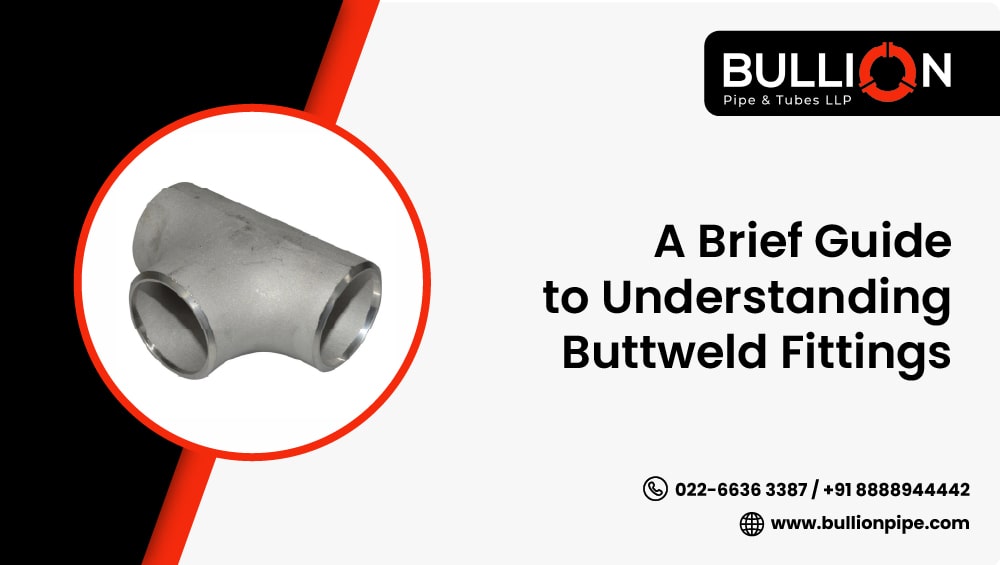
Tees are used to divide or string together her flow. A tee has three ends of the same diameter, while a reducing tee connects pipes of varying sizes.
4. Caps:
These are used to close the termination of a pipe, preventing fluid flow. They are commonly found in pressure vessels and piping termination points.
5. Crosses:
Cross fittings connect four different pipes and are typically used in fire sprinkler and approach systems.
6. Stub Ends:
Stub ends are used with lap joint flanges and are ideal for systems that require frequent dismantling for cleaning or inspection.
A reliable buttweld becoming a Stockist will typically offer these complete fittings in multiple sizes, elements, and pressure classes to meet industry-defined boundaries.
Manufacturing Approach of Buttweld Fittings
Butt weld fittings are usually manufactured from unbounded or welded pipes through actions like hot forming, cold forming, and machining. The casual manufacturing stages mix:
1. Cutting:
The pipe is cut to the fundamental length specified on the relevant design.
2. Heating:
For hot-forming mechanisms, the pipe sections are heated to make the material more malleable.
3. Heat Treatment:
This system escalates the mechanical property and relieves internal stress caused during forming.
4. Machining and Finishing:
Curving, polishing, and surface finishing validate the becoming meeting dimensional credibility and pleasing standards.
5. Testing and Inspection:
Per appropriate, it undergoes non-destructive testing (NDT), dimensional inspection, and hydrostatic testing to examine quality and integrity.
A trusted butt-weldable Manufacturer in India adheres to strict quality standards throughout these stages to ensure authenticity, durability, and safety in the whole compatible product.
Components Used in Buttweld Fittings
The choice of material for a buttweld apt depends on its application, operating controls, and fluid type.
Simple matter attached:
Stainless Steel: Wonderful corrosion resistance; well-suited for food processing, chemical, and pharmaceutical industries.
Carbon Steel: High wealth and cost-impactful; ideal for oil, gas, and mining plants.
Alloy Steel: Withstands high temperatures and pressures; used in heat exchangers and boilers.
Duplex and Super Duplex Steel: Offers the best corrosion resistance and asset; suitable for offshore and marine applications.
Nickel Alloys: Designed for too corrosive and high-temperature environments.
Advantages of Using Buttweld Fittings
Buttweld fittings are preferred across industries for their numerous mechanical and economic gains. Below are the key advantages:
1. Strong and Permanent Joints:
The welded connection creates a robust bond within the
- Pipe and apt
- Ensuring structural integrity under high stress and pressure.
2. Leak-Proof Performance:
Because the joints are welded, there is
- Minimal risk of leaks\
- Generating butt weld fittings
- Ideal for fluid and gas transport.
3. Smooth Internal Surface:
The deficiency of socket welds ensures smooth
- Internal surfaces
- Reducing turbulence
- Decreasing pressure drop.
4. Cost-Impactful Solution:
But installation takes longer due to welding; the long-term performance and minimal maintenance costs make them thrifty.
5. Reduced Maintenance:
Once installed, buttweld fittings require little to no maintenance, rendering them ideal for systems operating ceaselessly.
6. Versatility:
These fittings are available in a wide range of diameters, thicknesses, and elements to suit diverse industrial applications.
7. Elegant Outward look:
The unconfined look of welded joints adds a professional finish to piping systems, particularly in visible installations.
Applications of Buttweld Fittings
Because of their property and durability, buttweld fittings are used in various high-demand industries, including:
Oil and Gas Industry: For transporting beastly oil, natural gas, and petrochemical fluids under high pressure.
Strength Generation Plants: In
- Boiler systems
- Condensers
- Heat exchangers.
Chemical and Petrochemical Industries: For handling corrosive and reactive chemicals.
Water Treatment and Waste Management: In pipelines that carry treated water and industrial effluents.
Pharmaceutical and Food Processing: For hygienic, contamination-free fluid transfer.
Shipbuilding and Marine Applications: Due to their resistance to saline environments.
An experienced butt weld-appropriate Stockist can provide specialised fittings that comply with industry standards and project-unique requirements.
Why Decide on a Reliable Buttweld-Befitting Manufacturer in India
India is home to several globally recognised butt weld fitting Manufacturers known for their premier quality, technical talent, and cost capability. Choosing the accurate manufacturer ensures:
Observance of International Standards: Conformity to
- ASME
- ASTM
- ISO specifications.
Quality Dependence: Broad testing and inspection for accuracy.
Material Traceability: Provision of Mill Test Certificates for complete transparency.
Customisation Options: Openness to
- Non-standard sizes
- Special ingredients based on customer needs
On-Time Delivery: Large inventories reserved by well-known buttweld befitting Stockists secure prompt delivery.
By partnering with a trusted supplier, industries can reach
- Seamless performance
- Reduced downtime
- Strengthened active safety.
Maintenance and Inspection Tips
To ensure the long-term performance of buttweld fittings, consider the following maintenance practices:
Nonstop Visual Inspection: Examine for signs of
- Corrosion
- Cracks
- Weld defects
Non-Destructive Testing (NDT): Periodic ultrasonic or radiographic testing ensures structural integrity.
Cleaning: Keep internal surfaces clear to prevent chemical or particle buildup.
Monitoring Temperature and Pressure: Validate operating rules remain within the appropriate rated limits.
Replacement Schedule: Replace worn or corroded fittings early to prevent routine failure.
Result
Buttweld fittings are important components that validate safe, reliable, and organised performance in industrial piping systems. Their welded links offer leading assets, leak-proof operation, and long-term durability compared to different joint types.
Choosing the accurate buttweld becoming Supplier or a butt-weld-compatible Manufacturer in India ensures compliance with quality standards, access to licensed assets, and timely delivery for critical applications. Whether for oil and gas, skill generation, or chemical processing, weld fittings remain the support of modern pipeline development—guaranteeing smooth, endless flow and long-lasting clarity.
FAQs
1. Are buttweld fittings customisable?
Yes. Many butt weld-relevant Manufacturers in India, like Bullion Pipe, provide customised fittings in various sizes, wall thicknesses, and elements to meet particular project conditions.
. What are the simplest standards followed for buttweld fittings?
The most recognised standards include
- ASME B16.9
- MSS-SP-43
- ASTM A403
- ASTM A234